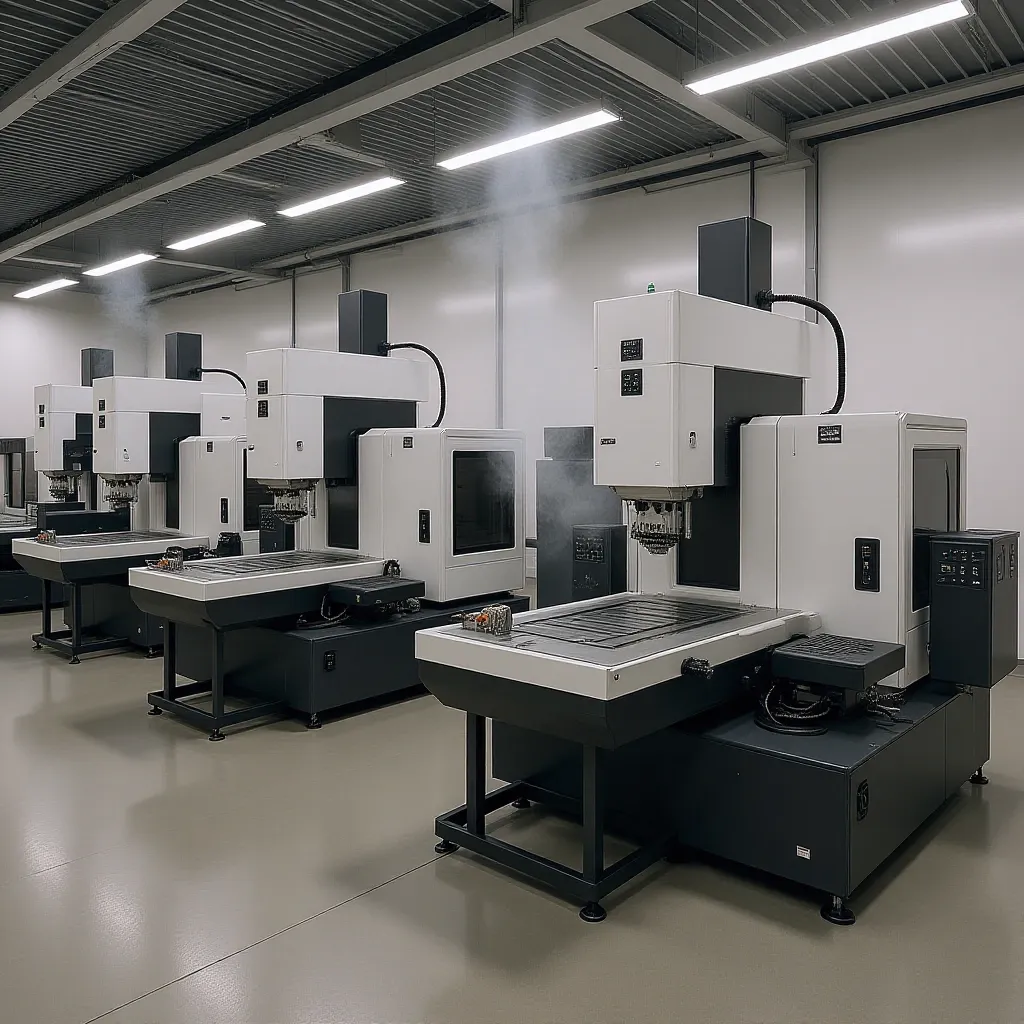
5-axis CNC machining services can help access multi-face features, compound angles, and contoured surfaces with fewer setups when the part geometry and workholding allow. We review the drawing, material, critical dimensions, finishing, quantity, and inspection needs before confirming process fit and quotation.
Our 5-axis CNC machining is aimed at the geometry that stops a 3-axis plan: undercut walls, pockets you can only reach from the side, blended compound angles, and thin-wall sections where a second fixture would move the datums. Those features come off in one clamping instead of a chain of re-fixturings.
The difference is not the spindle โ it is the datum. A single setup holds the two surfaces your drawing actually dimensions from, so position error never stacks up between operations, and the strategy proven out on the prototype transfers straight to production.
5-axis machining center ยท simultaneous cut
Prototype, low-volume, and repeat production โ quoted, fixtured, and inspected by one team.
Our 5-axis CNC machining services are considered for parts with features on several faces, compound angles, undercuts, or contoured surfaces. Drawing review considers tool access, datum relationships, workholding, material, tolerance callouts, and the requested inspection scope. We typically provide a quotation within two business days after complete drawings and project requirements are received; complex parts or missing information may take longer.
5 axis machining CNC and simultaneous 5-axis milling describe the same motion; what changes the bill is how many faces you dimension from and how many times the part has to be re-clamped. Every re-clamp adds a fixture, a datum shift, and an operator decision โ so the gains below are measured in setups rather than spindle hours.
| Approach | Setups for a five-face part | Datum error risk | Where it fits | What drives the cost |
|---|---|---|---|---|
| 3-axis milling | Three to five re-clampings | Stacks with every re-clamp | Prismatic parts machined on one to three faces | Fixtures, handling, and labour |
| 3+2 indexed (same centers) | One or two | Low โ the part stays clamped while the table indexes | Angled but simple faces, drilled and milled | Indexing time plus one fixture |
| 5-axis simultaneous | One | Lowest โ datums never leave the machine | Undercuts, compound angles, contoured five-face geometry | Machine hourly rate |
Machine configuration and setup are selected after reviewing the part model and drawing. Rather than publishing a general tolerance or size promise, we check the geometry, access, stock, workholding, and inspection requirements for the specific inquiry.
| Review item | What is checked |
|---|---|
| Geometry | Multi-face access, compound angles, undercuts, and contoured surfaces |
| Part envelope | Dimensions reviewed against available machine travel and workholding |
| Tolerances | Critical dimensions and datum relationships assessed from the drawing |
| Materials | Material grade, stock form, and availability confirmed for the project |
| Inspection | Measurement approach and requested records agreed within project scope |
For process comparisons, see our CNC machining services overview. Material suitability, stock availability, and any secondary finishing are confirmed against the drawing and project requirements.
Parts with features on several faces, angled passages, or contoured surfaces may benefit from a 5-axis setup when tool access and workholding permit. The drawing review determines whether simultaneous 5-axis machining, indexed machining, or another process is suitable.
For features with critical relationships across faces, the setup plan considers datum strategy and how dimensions will be inspected after machining.
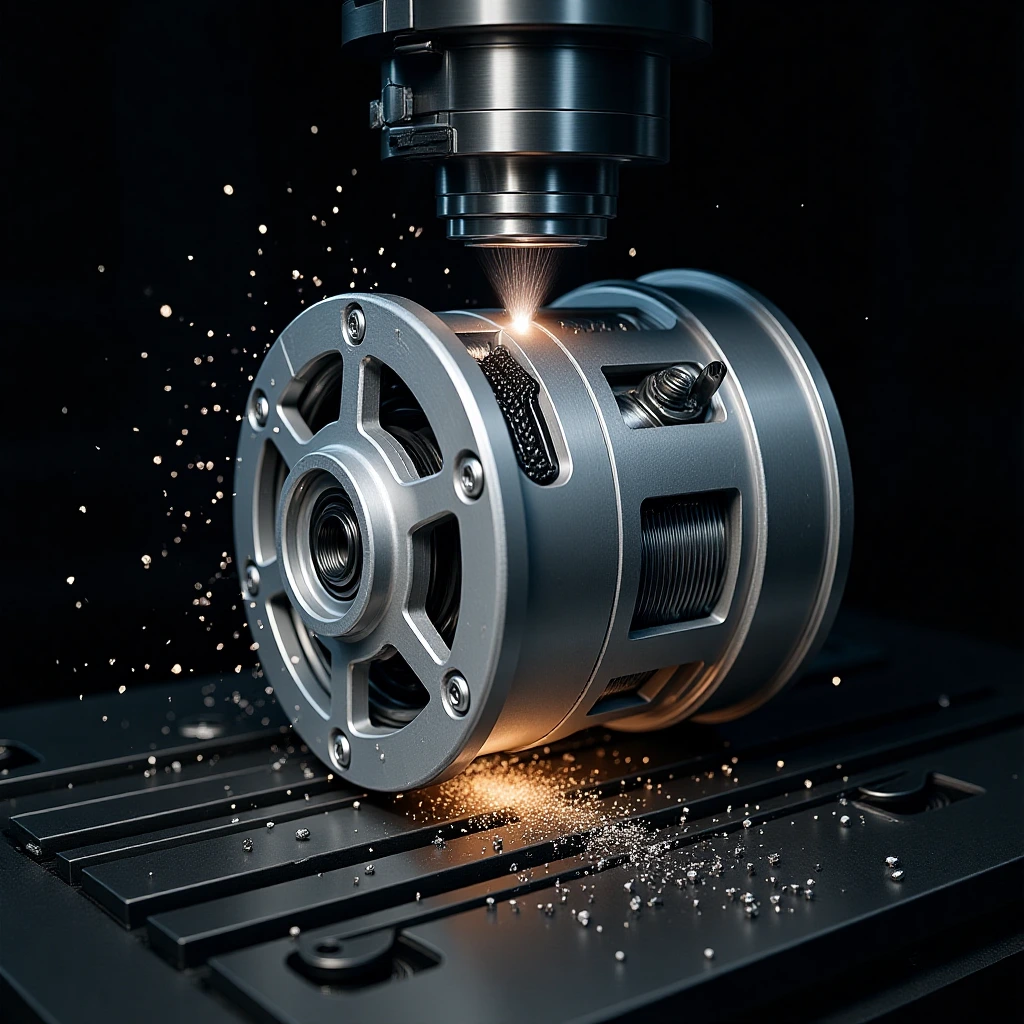
Typical complex part: contoured geometry machined from a solid billet in one clamping.
How geometry, material, quantity, and finishing requirements affect a project quotation.
5-axis CNC machining price is driven by the work rather than a published list: material and stock size set the raw cost, the number of critical callouts decides how much inspection is required, batch size decides how the setup is amortized, and the number of clampings decides machine time.
Choosing a 5 axis CNC machining service comes down to how fast that number arrives and whether the shop tells you when a cheaper process would do. If your part only needs three faces machined, we quote 3-axis work instead of selling you five axes.
Start an inquiry with the part, material, quantity, finish, and critical-feature details. Drawing files can be shared through an agreed channel after initial contact. Quotations are prepared within two business days after complete drawings and project requirements are received; manufacturing and shipping schedules are confirmed for the agreed scope.
When multi-face access or compound geometry makes 5-axis machining worth reviewing.
If critical faces can be reached with indexed or 3-axis setups, those approaches may be suitable. 5-axis machining is considered for parts with undercuts, contoured walls, or dimensions that relate multiple faces. The drawing review compares geometry, setup strategy, and inspection requirements before the process is confirmed.
Explore aircraft and spacecraft component cases involving multi-face and contoured geometry.
Browse chassis, powertrain, braking, and EV component cases related to complex machining access.
Explore machined chassis, engine, transmission, braking, and accessory components.
Browse bicycle frame, drivetrain, braking, and suspension component cases.
5-axis CNC machining is simultaneous milling: the tool moves along X, Y, and Z while the workpiece rotates on two further axes (A and C) at the same time, so one clamping reaches five faces. You need it when a part has undercuts, deep cavities, or compound angles that would otherwise force re-fixturing; if the geometry is prismatic with machining on two or three faces, 3-axis or 3+2 is usually the cheaper route.
Also called 5-axis CNC machining, the process uses linear and rotary motion to reach features from multiple directions. For a setup comparison, see the process table above.
5-axis machining may suit parts with multi-face access requirements, undercuts, deep cavities, or compound angles. For a mainly prismatic part with features on a few accessible faces, 3-axis or indexed machining may also be suitable; the drawing and setup plan determine the preferred route.
Cost depends on the part geometry, setup plan, material, quantity, and inspection requirements. A drawing review can compare 5-axis with indexed or 3-axis approaches where suitable.
Material options depend on stock availability, geometry, and project requirements. Include the required grade in your drawing package so suitability can be reviewed.
Tolerances are reviewed from the part drawing. Feasibility depends on geometry, material, workholding, machining strategy, and inspection method, and is confirmed during quotation.
Share the part dimensions and model so the available machine envelope, tool access, workholding, and setup approach can be reviewed before quotation.
5-axis motion can allow a suitable tool orientation on contoured geometry, but the achieved finish depends on the material, tooling, toolpath, and finishing requirements. Specify the required finish on the drawing for review.
Share your drawing or model and the geometry, tool access, workholding, and critical dimensions can be reviewed to determine a suitable approach. Parts with undercuts, deep cavities, organic surfaces, or features requiring access from multiple angles typically benefit most from 5-axis machining.
Share your drawing and project requirements to review whether 5-axis, indexed machining, or another CNC process fits the part. Quotation, production timing, inspection records, and requested certificates are confirmed against the agreed project scope.
Include the available 2D drawing or 3D model, material, quantity, finish, and critical dimensions.